

I’m finding a lot of what passes for leadership right now really hard to watch.
The blame. The control. The ego.
It’s on the TV. In the headlines. Even in the flags on cars and buildings.
The other day my 9-year-old son saw the news and asked, “Why is that man shouting?” I didn’t have an answer I felt proud of.
That moment stuck. Because I know the impact bad leadership has. Not just on the teams and organisations I work with, but on people’s confidence, wellbeing, and in the wider world, sometimes even their safety.
Toxic leadership isn’t always loud
It’s easy to think of toxic leadership as the boss who yells, or the politician who blusters. But most of the time, it’s quieter and more disturbing than that.
- The leader who shuts down dissent by raising an eyebrow.
- The leader who withholds information, so they stay in control.
- The leader who stops listening the moment they hear something they don’t like.
- The leader who shifts blame sideways instead of taking responsibility.
Toxic leadership isn’t always dramatic. But the damage builds.
The ripple effect
I get to see it up close with the leaders and teams I coach.
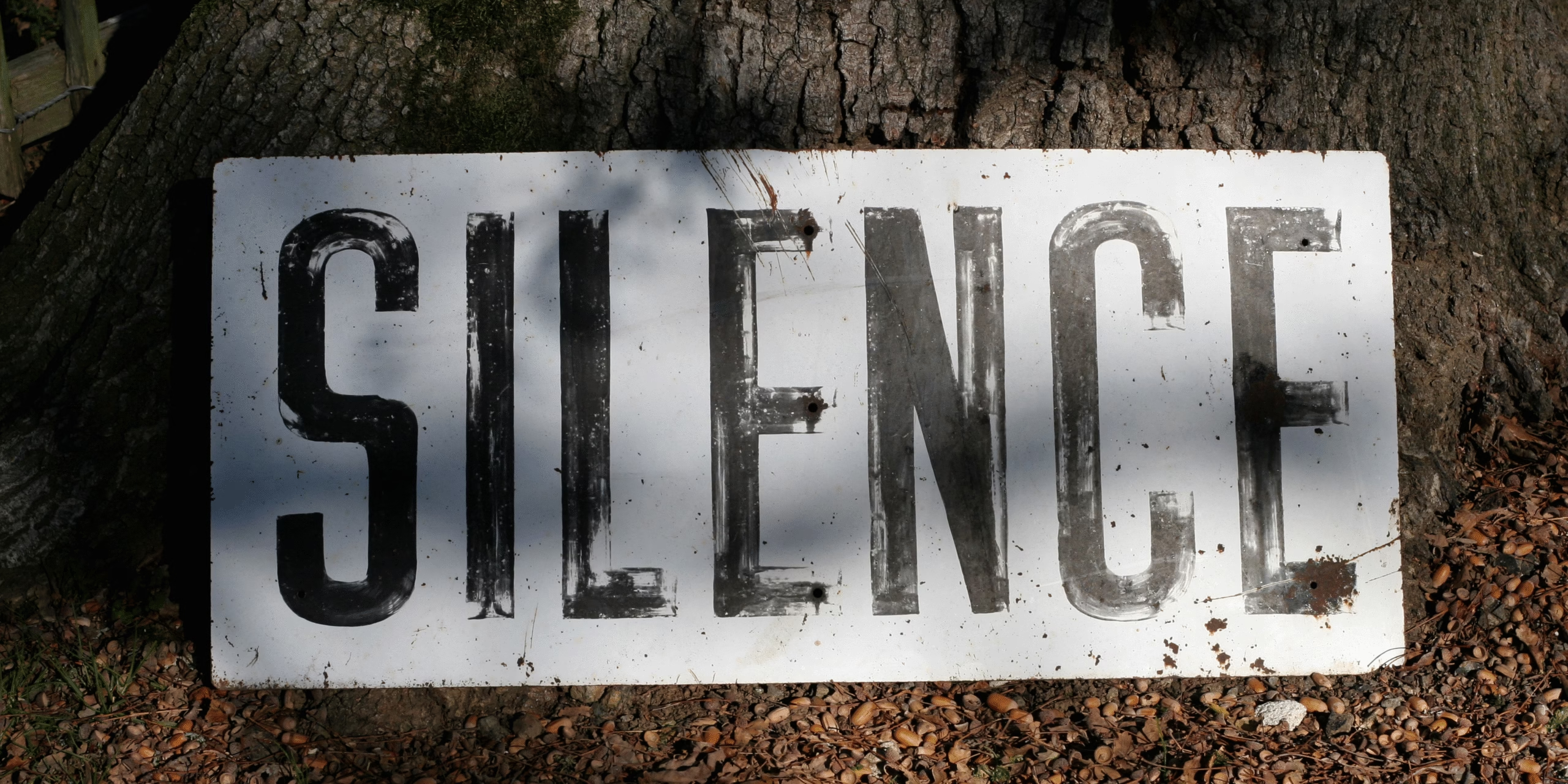
One team I worked with had brilliant ideas but three people had stopped contributing in meetings. Not because they didn’t care. But because the loudest voice in the room – the leader – made it unsafe to try.
That’s the ripple:
• For individuals: they stay quiet or worse, resort to people pleasing for an easy life. Ultimately, it eats into their confidence, fuels that negative inner critic and squashes any motivation to go above and beyond.
• For teams: silence gets heavier, trust breaks down, ideas stop flowing and performance slips.
• For organisations and beyond: people leave, culture rots, and mistrust spreads further than we realise.
Why it’s hard to call out
It’s no wonder people stay quiet. Most people don’t want to rock the boat. They worry about the consequences: “What will happen to me if I speak up?”
People walk out of rooms wondering, “Was it just me who found that unacceptable?” But because no one else said anything, they stay silent too. That’s the ‘bystander effect’ in action – when everyone assumes someone else will speak up, so no one does.
In many workplaces, these situations are often compounded by results being rewarded above all else. If someone’s hitting the numbers, their behaviour – the how – gets excused.
That’s why toxic leadership gets away with it, because people are scared, or tired and after a while, people lose faith that change is possible.
Independent analysis during the ‘Great Resignation’ of 2021 found that toxic culture was 10x more predictive of attrition than pay.
What real leadership looks like instead
I feel at a visceral level that leadership doesn’t have to be like this.
I believe leadership at its best is about:
✨ Creating trust, not fear
✨ Listening, even when it’s uncomfortable
✨ Owning mistakes out loud
✨ Building people up instead of breaking them down
✨ Recognising the value of diversity and the power of what we can achieve together
It’s not about perfection. It’s about making choices, over and over again, that put people at the centre.
Why this matters
When toxic leadership dominates the headlines, it’s easy to feel helpless. I feel it too.
But every time a leader chooses to break the pattern, whether it’s in a meeting, in a conversation, or in how they hold themselves accountable, it shifts something. Those small shifts matter and it’s empowering for others to see.
I can’t change what my son sees on the news. But I can do my part to support the kind of leadership I want him to experience in the future.
We can all play a role in modelling something different. As leaders. As colleagues. As parents. As humans.
This is why my Leadership Coaching work focuses on helping leaders build trust, clarity, and confidence, so they can model healthier leadership in practice, not just in theory.
Because toxic leadership might be loud. But healthier, human leadership is what lasts.